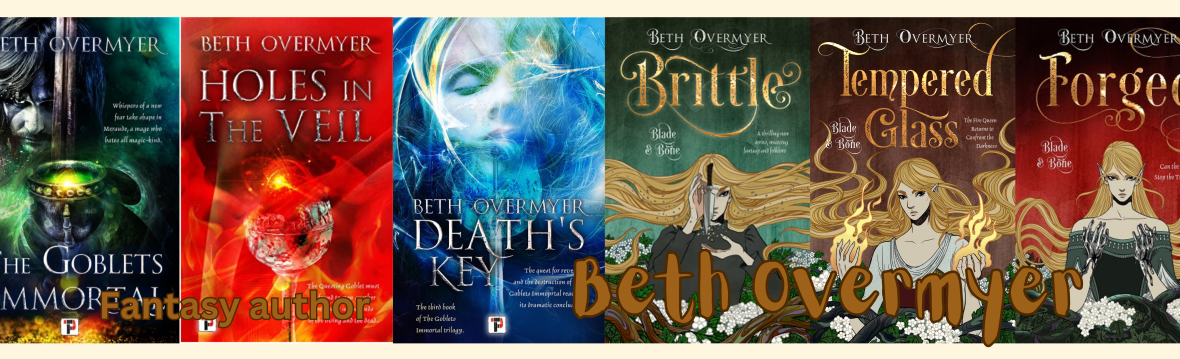

Are you interested in working with a small press? Well, there are tons out there. Some are good, some are…not so good. But how do you find them in the first place? And if they accept your book manuscript, what happens next? Here’s a bit of advice from me, Beth. I’ve worked with several small presses and know a bit of what’s involved. Ready? Dive in!
Hunting
There are many website and newsletters out there that list small presses. Here’s a short list:
– The [Submission] Grinder by Diabolical Plots
The Grinder offers you two different search engines: one for searching by name of publisher/magazine/e-zine/etc. and one more specific one. The latter you can enter information into such as genre, manuscript length, pay scale, and so forth, and different options will pop up. Just click on the options and then head to the publisher’s website to see if your work is a good fit for them.
– Duotrope
It’s similar to The Grinder, but this one charges a fee.
– QueryTracker
This mostly lists agents, but there are some publishing houses listed as well that are open to non-agented manuscripts.
– Authors Publish
A newsletter put together by the Janses. Each email mentions different publishers or publications that are out there. They seem to vet some, while others they don’t have much information on.
Got a bite?
So, you checked out the publisher, made sure they had a good reputation, submitted, and you’ve got yourself an offer. Congratulations! If you haven’t already, it’s important to ask questions, not just of the publishing house but of its authors and yourself. Some questions might look like:
– What rights does the publisher want to license?
– Would I make net or gross on royalties?
– Are other authors happy with this press?
– Do I like their covers? (Do not underestimate this question. If the covers are shoddy work, yours will most likely be shoddy work, too. And let’s face it: people really do judge a book by its cover, especially when they go to purchase something.)
– What are their books’ current sales ranks on Amazon?
– What do reviewers say about this publisher’s books?
– What happens if my book goes out of print? Or if the publisher folds?
– What is the advance?
– What does the editing process look like? Does the editor respect authors’ visions?
– What does the marketing/publicity department do?
– What is expected of me for marketing/publicity?
One red flag would be if the house rushes you to sign or brushes off your questions. Don’t be shy. This is your publishing future, after all.
Be diligent about thoroughly reading any contract offered and make certain you understand the terms. If something confuses you, Google can be your friend. Consulting a literary attorney is also an option, though they can be expensive. Note that legal advice can’t legally be dispensed for free online.
The pros and cons of a small press
When you self-publish a book, you take on all the risk yourself. It’s an investment, and if you succeed or fail, it’s on you. With a small press, they edit your book (with you), they create the cover, they do the formatting, and they list your book. The thing with any publishing situation is that you need to do a lot of marketing and publicity, but you have support and aren’t the only one pushing your book to potential readers.
Some cons are that unlike self-publishing, you don’t get to set your own prices, decide when your book goes on sale, or keep the majority of the profit. If you receive an advance from your publisher, you’re expected to earn back the amount for them via sold books before you start earning royalties. And those royalties might be from gross profit (check your contract!)
After signing
This has been my experience with the three small presses I’ve worked with: after signing, I’ve been asked to fill out a questionnaire. With Flame Tree Press, that questionnaire was a satisfyingly exhaustive thirteen pages. Some of the questions involved:
– Author’s name
– Title of work
– Short bio
– Long bio
– 350-character blurb (aka cover copy)
– 100-word blurb
– 300 to 500 word blurb
– A list of media contacts
– 10 questions and their answers (such as “What is the theme of your book?” and “Where did you write this book?”)
– Ideas for the perfect cover for the book
And so forth.
While waiting for the first round of edits, I shouted about the book on social media (the advice is usually to pick one to three SM sites to dedicate your efforts to), re-dedicated myself to my blog and website (this time buying my own domain name), re-started my e-newsletter, and celebrated with my family, friends, and beta readers.
Edits
For my debut book with Flame Tree Press (The Goblets Immortal), the first round of edits came within several months of signing. Two editors had done a simultaneous read of my novel and made review notes in the Word document: one tackling content edits, the other looking more at line edits. I had two weeks to make the necessary changes and turn the document back in to the head editor, and then waited for another round. All-in-all, I usually do three rounds of editing and proofreading with FTP, but for my earlier books, I sometimes did four (my second and third books needed pre-edits, which consisted of me going back and adding more backstory to catch readers up on what had happened thus far in the series.)
__
A version of this essay was first published with Go Scribbler. I hope it helps someone!
Beth

 Beth Overmyer
This is really nice of you to share all this information! I had thought about writing a cookbook but at this age I will stick to just a blog! Lol
LikeLiked by 1 person
Aw, thanks, Diane! I really enjoy your blog. Love seeing all those scrumptious recipes!
LikeLike